Would you like to switch to the accessible version of this site?

Go to accessible site Close modal window

Don't need the accessible version of this site?

Hide the accessibility button Close modal window
Accessibility View Close toolbar
Menu
  • Home
  • About Us
    • Meet the Dentist
    • Meet the Staff
    • FAQs
    • Office Tour
  • Our Services
    • Dental Examinations
    • Dental Implants
    • Restorative Dentistry
    • Teeth Whitening
  • Smile Gallery
    • Before & After Library
    • Testimonials
  • Insurance
  • Contact Us
  • Appointment Request
    • New Patient Forms
  • Patient Education
    • Dental Education Library
      • Oral Health Topics
      • Tooth Care
      • Dental Problems
      • Treatment
        • Cosmetic Dentistry
      • Pain Management
      • Patient Information
      • Product Reviews
      • Glossary
      • Links
  • General Dentistry
    • Bad Breathe
    • Braces
    • Brushing & Flossing
    • Cleaning & Polishing
    • Deep Scaling/Root Planing
    • Dental Examinations
    • Emergency Dental
      • What to do?
    • Family Dentistry
    • Gingivitis
    • Gum Disease
    • Prevention & Care
    • Teeth Sensitivity
    • Tooth Decay Prevention
    • Root Canals
    • Sealants
    • X-Rays
  • Pediatric Dentistry
    • Infants & Toddlers
      • Baby Teeth
      • Thumb Sucking
      • Baby Bottle Cavities
      • Teaching Children to Brush
    • Children & Teens
      • Getting Your Kids to Brush
      • Pulling Out a Loose Tooth
      • Favorite Foods & Cavities
      • Dental Anxiety
    • Emergency Dental
    • Dental4kids
      • Printable Games & Puzzles
      • Printable Coloring Pages
  • Cosmetic Dentistry
    • Dental Bonding
    • Dental Crowns
    • Dentures
    • Gum Recontouring
    • Invisalign
    • Porcelain Veneers
    • Smile Makeover
    • Tooth Whitening
    • Tooth Colored Fillings
  • Sedation Dentistry
    • Why Sedation Dentistry
    • Sedation Dentistry FAQs
    • Sedation Dentistry Types
  • Implant Dentistry
    • Dental Implants
    • FAQs on Dental Implants
    • Types of Implants
    • Why Choose Implants
  • Dental Problems
    • Dental Technology
    • Abscessed Tooth
    • Cavities
    • Dental Plaque
    • Dry Mouth
    • Fluorosis
    • Impacted Wisdom Teeth
    • Extractions/Wisdom Teeth
    • Maxillofacial Surgery
    • Oral Cancer
    • Toothache
    • Teeth Grinding
    • TMJ
  • Newsletter Library
  • Welcome Back Letter
Round Tooth Logo

(416) 694-8144

Our Locations
  • Home >
  • Articles >
  • Orthodontics >
  • Temporary Anchorage Devices

Temporary Anchorage Devices

  • Created in Orthodontics

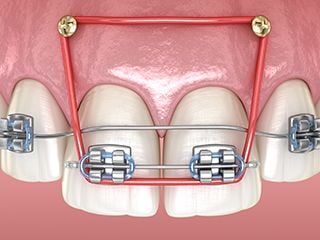
TADTemporary anchorage devices (TADs), also known as “mini implants,” are titanium devices that are screwed into your gum and jaw. TADs act as anchors to support the movement of your teeth. They can be positioned in different areas of your jaw, depending on what anchorage and movement you need. Since they essentially become part of your body for a time, they are specifically compatible with human tissue.

A Simple Procedure

Your orthodontist will begin the procedure by using a local anesthetic to numb a small portion of your gum, specifically where the TAD will be anchored. When your TAD is inserted, you should only feel slight pressure. Some discomfort may occur after the procedure is finished and the anesthetic wears off. Over-the-counter pain medication will be enough to alleviate your residual pain.

It’s as simple to remove a TAD as it is to insert one. It is a quick and painless process that requires no anesthesia. After a few days have passed since its removal, the site generally heals with no lingering pain.

Taking Care of Your TAD

While the chance of your TAD getting infected is small, it’s important to prevent this from happening. The following are some helpful tips to take care of your TAD:

  • After the TAD is inserted, it’s recommended to rinse your mouth twice a day for five days with an antimicrobial mouthwash. After five days, you can just dip your toothbrush into the mouthwash and gently clean around the TAD every day.
  • Do not use an electric toothbrush while there are TADs placed in your mouth.
  • Refrain from touching or fidgeting with your TAD.
  • Your orthodontist may recommend that you switch from your normal toothpaste to one that kills oral bacteria.
  • Educational Videos
  • Cosmetic & General Dentistry
  • Emergency Care
  • Endodontics
  • Implant Dentistry
  • Oral Health
  • Oral Hygiene
  • Oral Surgery
  • Orthodontics
  • Pediatric Dentistry
  • Periodontal Therapy
  • Technology

Contact Us

Send Us an Email

Error!

    Our Location

    Find us on the map

    Hours of Operation

    Our Regular Schedule

    Dentistry in the Beach

    Monday:

    10:00 am-7:00 pm

    Tuesday:

    8:00 am-5:00 pm

    Wednesday:

    8:00 am-5:00 pm

    Thursday:

    8:00 am-5:00 pm

    Friday:

    Administration Day

    Saturday:

    Closed

    Sunday:

    Closed

    • Copyright © 2026 MH Sub I, LLC dba Officite.
    • Admin Log In
    • Site Map